


Reduced solids load in aeration – fine screening system relieves Mühlbachtal wastewater treatment plant
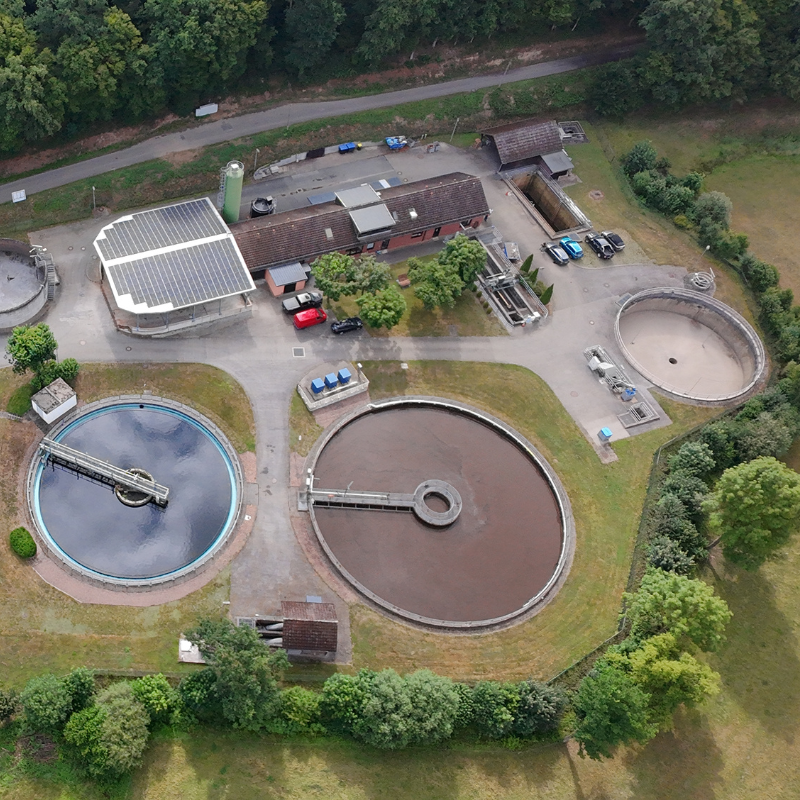
Fine materials such as hair and fibers represent a significant challenge in many wastewater treatment plants. They often pass through mechanical pre-treatment and cause deposits, clogging, and increased maintenance in the biological stage. The municipality of Nastätten responded to this challenge by installing a downstream fine screening system at the Mühlbachtal plant. The use of a compact drum screen significantly reduces the load on the aeration tanks while improving operational reliability and efficiency.

More efficient wastewater treatment through upstream fine screening
The municipality of Nastätten relies on modern processes to optimize its wastewater treatment plants. Deputy operations manager Sven Hermann currently oversees six plants and several special structures, including the Mühlbachtal wastewater treatment plant – a site with considerable optimization potential, particularly in mechanical pre-treatment.
The plant is designed for 18,000 population equivalents and treats an average of around 4,000 m³ of wastewater per day. During wet weather, the inflow can increase to as much as 16,500 m³.
In the past, the use of a bar screen with 5 mm spacing repeatedly caused problems: fine organic solids, especially hair and fibers, passed through unhindered into the aeration tanks.
“The load of particles smaller than 6 mm led to severe contamination of aeration elements and mixers – in some cases with significant clogging,” explains Hermann. Cleaning these components was complex, as it required diver operations.
Solution through fine screening system
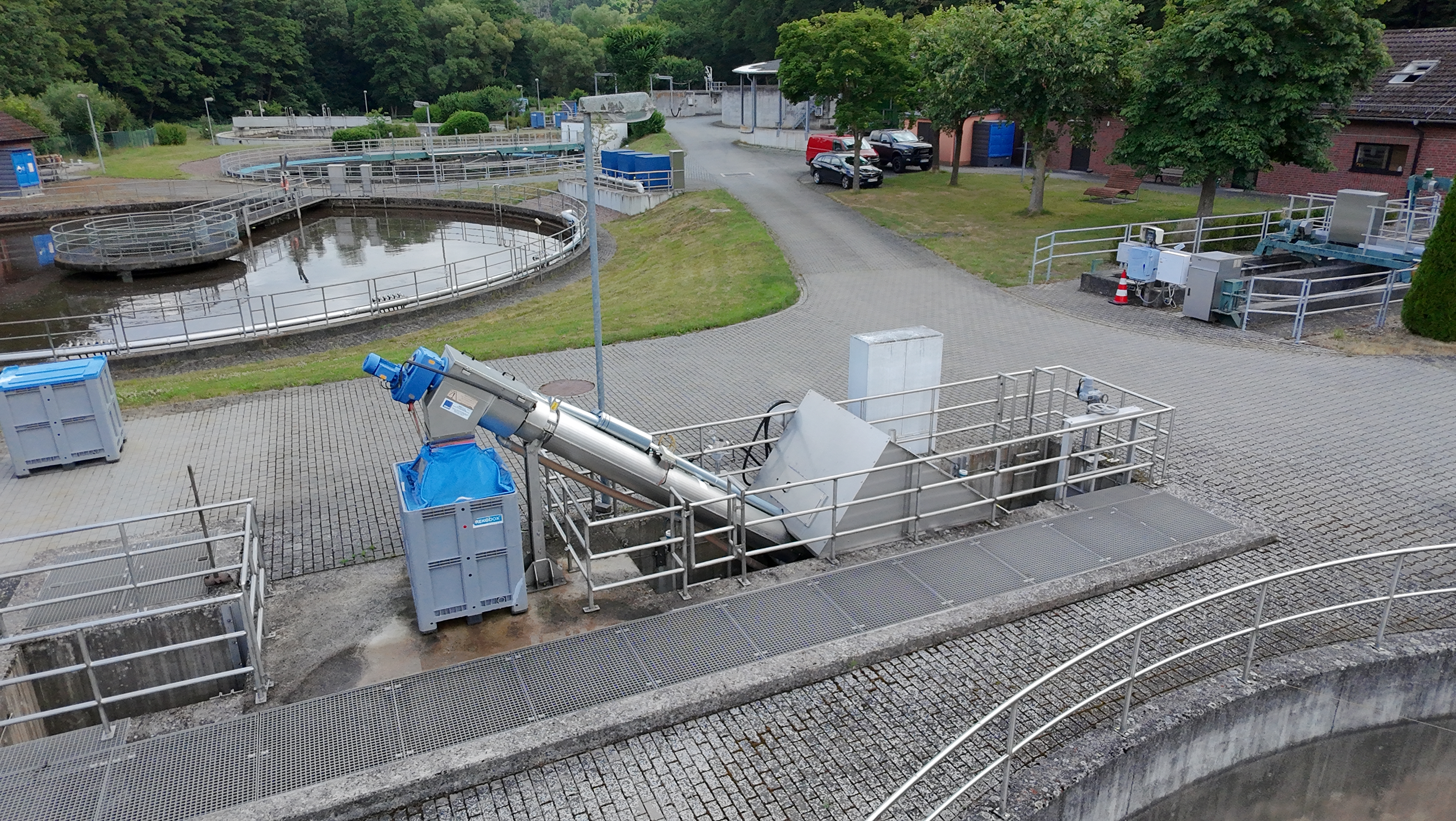
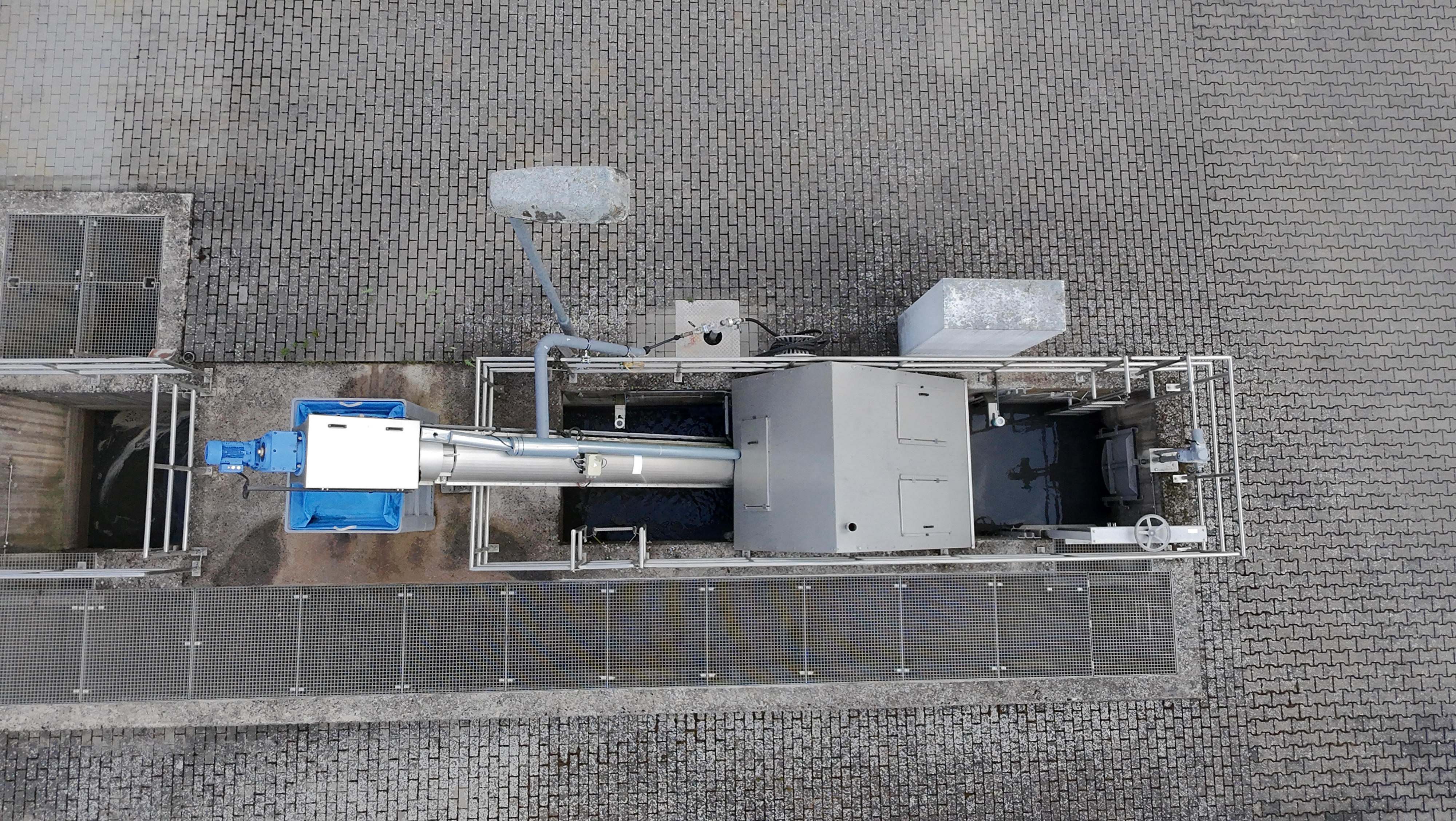
As part of a plant expansion in 2017, the decision was made to implement advanced mechanical pre-treatment. The choice fell on a VSA fine drum screen from Saveco GmbH, with a screen opening of just 3 mm.
The compact unit performs four processes simultaneously: screening, washing, conveying, and dewatering. This made the plant not only more efficient but also more space-saving. The selected solution replaces several individual units while providing improved separation efficiency.
Saveco was already known from previous projects: five other plants in the municipality are equipped with the manufacturer’s screening systems.
“The technology has been in operation for over ten years – reliable and with very low wear,” says Hermann.

Operating principle of the drum screen
The drum screen operates continuously: as the wastewater flows through the rotating screen, retained solids are treated by an internal washing and cleaning system, transported via a screw conveyor, dewatered, and finally discharged into a container or compactor.
Organic material is washed out, while the screenings are compacted.
Since the commissioning of the fine screening system, the solids load in the aeration tanks has decreased significantly.
“Contamination and clogging have almost completely disappeared. Cleaning of the tanks by divers is now required at most once a year,” reports Hermann.
The results are also evident quantitatively: the amount of separated solids is 1 to 1.5 times higher than before.
“On average, one to one and a half Rekoboxes of screenings are generated per week,” Hermann adds.
Another advantage is the low maintenance effort: after around eight years of operation, only the drum brushes have needed replacement.
Conclusion
By retrofitting a fine screening system, the municipality of Nastätten has not only increased operational reliability but also significantly reduced maintenance effort in the biological treatment stage.
The investment in modern screening technology pays off in the long term – both ecologically and economically.


